How Does Nervecept Work? A Step-by-Step Look at the Formula
The science-minded explanation, kept simple.
Nervecept works by supporting the environment around your peripheral nerves from four directions: it supplies structural nutrients for connective tissue, helps the body maintain a balanced inflammatory response, adds antioxidant protection against oxidative stress, and builds steady nutritional support through once-daily use.
How Do Peripheral Nerves Work?
Your nervous system has two main parts. The brain and spinal cord form the central system. Everything else, the network that reaches your arms, legs, hands and feet, is the peripheral nervous system.
Peripheral nerves carry two kinds of messages. Sensory signals travel up to the brain, telling you about touch, temperature and position. Motor signals travel down, telling your muscles to move. When both directions work smoothly, you can feel the ground under your feet and grip a coffee mug without thinking about it.
These nerves don't live in isolation. They're wrapped in protective layers and surrounded by connective tissue, tiny blood vessels and fluid. The health of that surrounding environment plays a big role in how comfortable your extremities feel.
For a medical overview of peripheral nerves, the National Institute of Neurological Disorders and Stroke is a helpful resource.
What Puts Everyday Stress on Your Nerves?
Several common factors can wear on the tissues around peripheral nerves over time:
- Age. Connective tissue naturally changes as the years pass.
- Repetitive strain. Long hours of standing, walking or typing.
- Oxidative stress. Free radicals build up from normal metabolism, pollution and poor sleep.
- Inflammatory imbalance. When the body's response stays switched on, comfort suffers.
- Diet gaps. Many diets fall short on plant compounds and key amino acids.
Nervecept doesn't change your age or your job. It's designed to give your body nutritional backup against these daily pressures.
Step 1: How Does Nervecept Support Tissue Structure?
The biggest share of each capsule, 500 mg, is glucosamine sulfate. Your body uses glucosamine to make the large molecules that give connective tissue its cushion and flexibility.
Chondroitin sulfate (50 mg) works as glucosamine's partner. It helps connective tissue hold water and stay resilient. MSM adds sulfur, a mineral the body needs to form these tissues, and methionine supplies an essential amino acid used to build proteins.
Together, these four nutrients focus on the "scaffolding" around your nerves and joints, the areas that take the most wear in daily life.
Step 2: How Does Nervecept Promote Inflammatory Balance?
Inflammation is a normal, helpful process. Problems start when it lingers. Three ingredients in Nervecept target this balance from slightly different angles:
- Boswellia serrata (67 mg) contains boswellic acids, which researchers study for their effect on inflammatory pathways.
- Turmeric (50 mg) provides curcuminoids, the golden compounds behind turmeric's long traditional use.
- Bromelain (8 mg) is a pineapple-stem enzyme often paired with turmeric in comfort formulas.
By helping the body keep its response in check, this trio supports day-to-day comfort and easier movement.
Step 3: How Does Nervecept Protect Against Oxidative Stress?
Nerve cells are especially sensitive to oxidative stress because they're long, active and use a lot of energy. Quercetin, a flavonoid found in apples, onions and berries, is one of the most studied plant antioxidants. Turmeric adds its own antioxidant activity on top of its comfort role.
This layer helps protect cells, including nerve cells, from the gradual damage free radicals can cause.
Step 4: Why Does Daily Use Matter?
Nutrients aren't stored forever. Your body uses them, breaks them down and needs more. Taking one capsule every day keeps a steady supply available instead of peaks and gaps.
That's why we describe Nervecept as a long-game formula. The first weeks build the habit. The months that follow are where steady nutritional support has a chance to show up in how you feel.
How Long Does Nervecept Take to Work?
There's no fixed timeline, because everyone's body, diet and lifestyle are different. As a general guide:
| Period | What's happening |
|---|---|
| Weeks 1 to 4 | Building the daily routine and steady nutrient levels |
| Months 2 to 3 | Ongoing support for tissue structure and inflammatory balance |
| Months 4 to 6 | Long-term consistency, the window many customers plan for |
Individual results vary. Pairing Nervecept with regular walking, good footwear and a plant-rich diet gives it the best support. Our nerve health guide has practical daily habits.
Frequently Asked Questions
Does Nervecept work right away?
Nervecept is a nutritional supplement, so its support builds gradually with daily use. Most customers plan for at least 90 days. Individual results vary.
Why does Nervecept contain glucosamine?
Glucosamine is the formula's largest ingredient at 500 mg. The body uses it to build the molecules that keep connective tissue cushioned and flexible, supporting comfort in the extremities.
What is the best time of day to take Nervecept?
The label suggests taking one capsule with 8 oz of water 20 to 30 minutes before a meal. Many people take it before breakfast so it becomes part of their morning routine.
Can I take more than one capsule to speed things up?
No. Do not exceed one capsule a day unless your healthcare professional advises otherwise. Consistency matters more than dose.
Can I take Nervecept with my other supplements?
Many people do, but check with your doctor or pharmacist first, especially if you take blood thinners or other medications.
Give Your Nerves Daily Support
The formula works best with consistency. Our 180-day package keeps you supplied at the lowest price per bottle, backed by a 60-day guarantee.
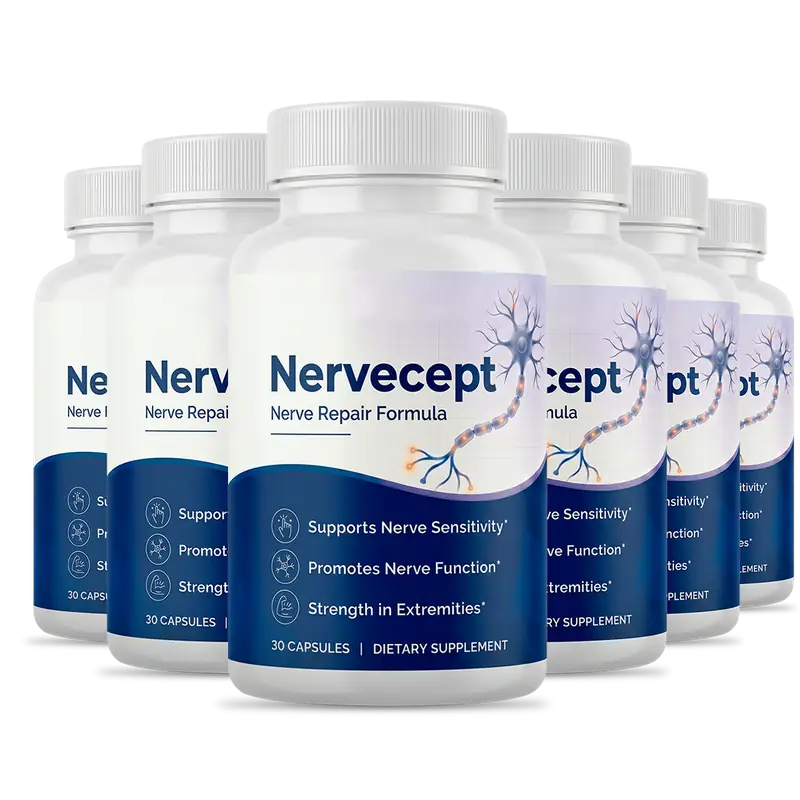
6 Bottles: $1074 $294 • Just $49 per bottle • Free US Shipping